|
|

Screening is currently on a break but stay tuned for updates.
See you soon.
|
ABOUT
Conceived and programmed by artists Nadia Hironaka and Matthew Suib, Screening aims to broaden the scope of and expand access to video art in Philadelphia, in part, by providing a venue less institutional than a museum, but more formal than your living room. Exhibitions series will be programmed along thematic lines, expanding perspectives on contemporary topics while pushing aesthetic boundaries.
EMAIL
info@screeningvideo.org
LINKS
voxpopuligallery.org
nadiahironaka.com
matthewsuib.blogspot.com
|
JOAN JONAS
JUNE 4–JUNE 27, 2010
|
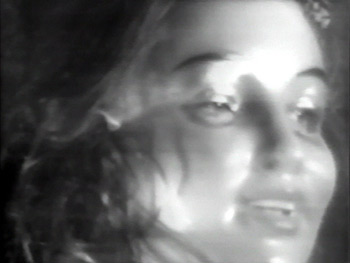
still from Organic Honey's Visual Telepathy, 1972, 17 min., b&w video with sound. Courtesy the artist.
After three years of exhibitions in our Chinatown gallery, Screening is proud to present its final exhibition: Organic Honey’s Visual Telepathy, by groundbreaking multi-media artist Joan Jonas.
Following Screening’s exhibition of work by experimental filmmaker Pat O’Neill, we conclude our exhibition program with the second of two exhibitions by pioneers of moving-image art—each demonstrating unique visions that have helped to pave the way for moving-image makers in recent decades.
Known for uncompromising experiments that fuse her knowledge of art history, modern theater, dance, sculpture and performance art, as well as Kabuki and Noh theater, Jonas has produced a singular body of work. These influences are on display in her 1972 videotape Organic Honey’s Visual Telepathy, all filtered through what was, at the time, the newly accessible technology of video production. Jonas’ performance-for-camera is part ritual, part magic show, exploring the possibilities of the female image through alter egos and technological transformation.
New York-based artist Joan Jonas (b. 1936) was awarded the American Film Institute's Maya Deren Award in 1988, and was also the recipient of the 3rd Annual Polaroid Video Art Award in 1987. Jonas has received grants for choreography, video and the visual arts from the New York State Council on the Arts; the National Endowment for the Arts; the Guggenheim Foundation; and the Rockefeller Foundation.
Jonas has performed and exhibited her work extensively throughout the world. In 2004 she was honored with a retrospective at the Queens Museum of Art in New York, entitled Joan Jonas: Five Works. She has also had major retrospectives at Stedelijk Museum and Stadtsgalerie Stuttgart, Stuttgart, Germany. Other one-person exhibitions and performances include Kunstmuseum, Bern; Walker Art Center, Minneapolis; The Kitchen, New York; San Francisco Museum of Art; University Art Museum, Berkeley, California; Pat Hearn Gallery and Sonnabend Gallery, New York, among others. Group exhibitions include the Whitney Museum of American Art Biennial Exhibition, New York; The Museum of Modern Art, New York; Institute of Contemporary Art, Philadelphia; Long Beach Museum of Art, California; Museum of Contemporary Art, Los Angeles; Documentas 5, 6, 8, and 11 in Kassel, Germany; and Montreal Festival du Nouveau Cinema et de la Video, among many others.
Jonas received a B.A. in Art History from Mount Holyoke College in 1958, studied sculpture at the School of the Museum of Fine Arts, Boston, and received an M.F.A. in Sculpture from Columbia University in 1965. Since 2000 she has taught at Massachusetts Institute of Technology, Cambridge, MA.
|
PAT O'NEILL
MARCH 5–MAY 30, 2010
|
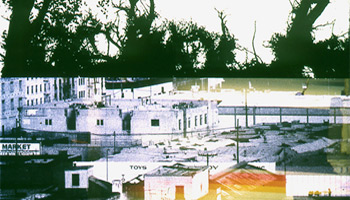
still from Horizontal Boundaries, 2008, 35mm transferred to HD video
23 minutes, color, stereo sound
Screening is very proud to present Horizontal Boundaries, by renowned avant-garde filmmaker Pat O'Neill. The film expands on O'Neill's unique form of image making, developed through a mastery of optical printing—the pre-digital foundation of cinematic special effects. In Horizontal Boundaries, the chaotic sprawl of Los Angeles is paralleled through a flurry of layered and fragmented scenes representing both cultural and topographical signifiers. Of the work, O'Neill has written, "The 'boundaries' in question turn out to be frame lines, the divisions between two images, one above the other on a strip of 35mm film. The projector gate is adjustable up or down in order to produce a single uninterrupted image: in this film the frame line is integrated into the compositional language of the piece". Within this barrage of celluloid imagery, the City of Angels is represented simultaneously as physical place, an idea and an image—all of which exist simultaneously and in varying degrees of blissful discord.
Los-Angeles based filmmaker Pat O'Neill (b. 1939) has enjoyed a career spanning five decades. In addition to producing many experimental films of his own, he founded Lookout Mountain Films which created visual effects for many Hollywood features, including George Lucas' Star Wars trilogy. O'Neill’s work has been exhibited internationally at museums and galleries including The Walker Art Center and MoMA, as well as multiplexes around the world. On December 30, 2008, his film Water and Power was selected for preservation, by the Library of Congress, by being added to the National Film Registry.
Support for this exhibition has been provided by The Pew Center for Arts & Heritage through the Philadelphia Exhibitions Initiative.
> Lookout Mountain Studios
|
VALÉRIE MRÉJEN
JANUARY 8–FEBRUARY 28, 2010
|
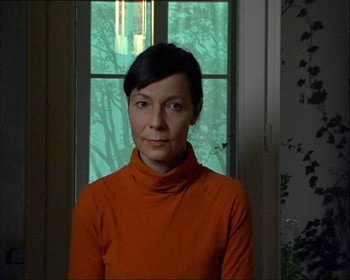
still from Ils Respirent, 2008, courtesy the artist and Galerie Serge le Borgne, Paris
Screening is proud to present Ils Respirent (They Breathe) by French artist, writer and filmmaker Valérie Mréjen. Employing elements of autobiography and a refined cinematic aesthetic (influenced by French filmmakers such as Chantal Akerman and Jean Renoir), Mréjen continues her exploration of portraiture and human relationships. Eight characters are pictured individually, almost motionless, while their thoughts play out as voice-overs, relating off-screen narratives that explore the emotional distress aroused by seemingly quotidian affairs. Though the content is charged, Mréjen directs her actors to read her script with detached indifference creating an effect, in her words, "like looking into a mirror in order to see oneself from a distance."
Ils Respirent also presents viewers with a formal inversion of popular cinema where we typically follow action and narrative while being left to conjecture much of a character's thoughts and emotions) but retains a heightened sense of drama through production devices such as lighting, scripting, editing/pacing and deadpan performance, through which the characters convey a sense of anxiety, restlessness and dark humor.
Valérie Mréjen lives and works in Paris. She is both a published writer (her books include Mon grand-père [1999] and L'agrume [2001]) and an established filmmaker, although both media often overlap and interrelate in her work. Her videos and films have been exhibited internationally at venues including the Tate Modern (London), Jeu de Paume and Centre Pompidou (Paris), and CCA Wattis Institute for Contemporary Arts (San Francisco). Mréjen is represented by Galerie Serge le Borgne (Paris).
|
LYNNE MARSH
NOVEMBER 6–DECEMBER 27, 2009
|
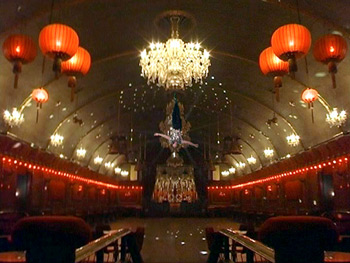
still from Lynne Marsh's Ballroom, video, 2004, courtesy the artist
Screening is proud to present Lynne Marsh's spellbinding video loop Ballroom. Ballroom presents a woman, athletic and glamorous, suspended upside down in the centre of a dancehall—the Rivoli Ballroom in South London—her glittering sequined costume reflecting light, like a mirror ball, onto the backdrop of a sumptuous interior. As she spins around with increasing speed, sending the reflections whirling, the soundtrack reaches a crescendo. The theatrical spectacle, similar to a magician-illusionist or circus-aerial act, leaves the audience wondering if they are witness to an illusion or a real event producing a subtle uncanniness. The work also calls into question the nature of mediated spaces like the Rivoli Ballroom. Having entered into the popular conscious through appearances in music videos (The Rivoli was used for Tina Turner's Private Dancer video amongst others), film and now video art, such spaces maintain a presence not just in a physical location, but in the collective memory and imagination as well.
Ballroom makes use of the aesthetics of game spaces and animation to fuse figure with object and architectural space. The video work creates a more complex phenomenal space where a filmed location appears as simulation and/or an imaginary space is created through a reconfiguration of the 'real' world.
Lynne Marsh was born in Canada and divides her time between Montréal, Berlin and London. She attended Concordia University in Montréal and completed her MA at Goldsmiths in London. Her work has been featured in recent solo exhibitions at Künstlerhaus Bethanien, Berlin, Steve Turner Contemporary, Los Angeles, the Musée d'art contemporain de Montreal and Danielle Arnaud contemporary art, London. Recent group exhibitions include Nightcomers, 10th Istanbul Biennial and There is no audience, Montehermoso, Vitoria-Gasteiz, Spain. Her videos have also featured in screenings at Babylon Mitte, Berlin, the BFI London and Artprojx at Prince Charles Cinema, London. Marsh's work will be presented in an upcoming solo exhibition at the Globe Gallery in Newcastle and as part of Catastrophe, the Québec City Biennial in 2010.
Marsh is Senior Lecturer in Fine Art at the University of Herefordshire.
|
HIRAKI SAWA
SEPTEMBER 4–NOVEMBER 1, 2009
|
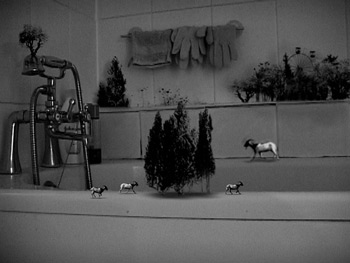
still from Hiraki Sawa's 8 Minutes, video, 2005, courtesy the artist and James Cohan Gallery, NYC
Screening is pleased to present Hiraki Sawa's 8 Minutes, a mesmerizing series of eight short vignettes comprised of the artists trademark dreamscape imagery. Sawa employs innovative animation techniques to transform the most quotidian of domestic scenes into beguiling visions—a wash basin becomes a lake and countertops become plains inhabited by vegetation and traversed by wild animals. Dramatic shifts in scale add to the surreal tension of these scenes, which simultaneously speak of a child's daydream and a rift between contemporary domestic life and the natural world.
Hiraki Sawa is a Japanese artist based in London. His video work has been presented in solo exhibitions at the Hirshhorn Museum and Sculpture Garden in Washington, DC and the Hammer Museum of Art in Los Angeles and has also been included in the Yokohama Triennial, 2005 and the Lyon Biennial, 2003. Sawa is represented by James Cohan Gallery, NYC.
|
OODA part 1:
Heather Bursch - Unreleased
JULY 10–AUGUST 2, 2009
OODA part 2:
Renee Petropoulos - Two or Three Things
I Know About Gas Station Mini-Marts
AUGUST 7–AUGUST 30, 2009
|
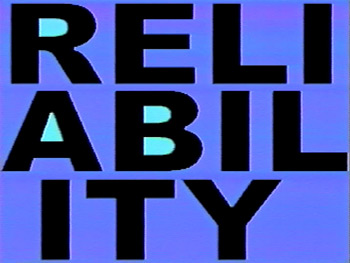
still from Renee Petropoulos's Two or Three Things I Know About Gas Station Mini-Marts, 2002, courtesy the artist
OODA is a two-part exhibition featuring the work of Los Angeles-based artists Heather Bursch and Renee Petropoulos. Though the individual works vary greatly in style and duration, both examine the role of site and audience in the authorship of an artwork. One of the perceived obstacles facing contemporary video art is convincing a viewer to regard the work from start to finish. Unlike film, which is typically screened in a theater with designated showtimes, video art is often viewed in a gallery setting where attendance is fluid. By employing the loop, Bursch and Petropoulos recognize the phenomenon of the 'drop-in' audience when viewing time-based art, and embrace the unscripted dialogue that takes place between artist, viewer, and venue.
Heather Bursch's Unreleased consists of a one-minute segment of Martin Scorcese's film, The King of Comedy, quoted, altered, and looped. An 'audience' made up of multiples of the artist's hand moving a mirrored card animates the comedian's endlessly repeating appearance and disappearance into the crowd. The comedian, though successful in eliciting laughter, nevertheless gets trapped in a shifting, mirrored response. The slippages between physical and virtual, crowd and individual, adulation and ridicule, are continually re-performed and evaluated by the accompanying laugh track. Scorcese's 1983 narrative about an individual's desire for an audience is brought into the present, where the location of the joke is unclear. The resulting adaptation of a film about television, which gets translated into digital format, tracks the idea of performance, recognition, and audience across the different media.
Heather Bursch lives and works in Los Angeles, CA. She holds a BFA from San Francisco Art Institute and an MFA from California Institute of the Arts. She is a Skowhegan participant and Macdowell Colony Fellow for Summer 2009.
Renee Petropoulos's Two or Three Things I Know About Gas Station Mini-Marts is based on the 1966 film Two or Three Things I Know About Her… by French director Jean-Luc Godard. Approximately 90 minutes in length, the duration of Godard's film also forms the structure of Petropoulos's video. The audio of the original film has been displaced and all speaking parts have been translated and re-spoken in English. The concurrent video - shot both in motion and at rest at multiple gas station mini-marts - loops approximately 5-1/2 times and ends when the soundtrack is complete. This misalignment between audio and video allows the possibility for the viewer to encounter a continually fluctuating relationship between the various parts. The automobile and the function of the gas station mini-mart serve to reinforce an idea of nomadicism and dispersed centrality where certain functions of social exchange and domestic necessity are articulated. These conditions become interwoven in both the understood public arena and in the implied 'private' space of one's own vehicle.
Renee Petropoulos has been exhibiting her work both nationally and internationally at venues including the ICA in London, The Jewish Museum in San Francisco and the Blaffer Museum in Houston. She is the recipient of numerous grants including a J. Paul Getty Fellowship, City of Los Angeles Individual Artists Grant and an Art Matters Grant. Recent Publications include The Narcissism of Small Differences by Leslie Dick, Nearly Ten Months by Annetta Kapon and the forthcoming Is It Possible by Chris Krauss.
OODA has been curated by Helen Cahng. Cahng is a Los Angeles based artist and curator who received her BFA from The University of the Arts and an MFA from Otis College of Art and Design. She is the recipient of a Leeway Foundation grant and a Pennsylvania Council on the Arts award. Her most recent project, “RERUNWAY", is a subscription based e-journal. To be added to the mailing list, send a blank email titled “RERUNWAY" to hachiko_station@yahoo.com.
|
MUNGO THOMSON
MAY 1–JUNE 28, 2009
|
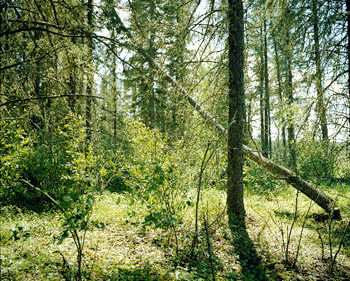
still from Silent Film of a Tree Falling in the Forest, 2005-06
16mm film, courtesy the artist
Screening is pleased to present Mungo Thomson's 16mm film loop, Silent Film of a Tree Falling in the Forest. Based in Los Angeles, Thomson is acclaimed for creating work across a variety of media that deftly engages art history, philosophy, pop-culture, science and mysticism in conceptual play and inquiry.
Filmed in 2005-06, Silent Film comprises six one-minute shots of stately trees falling amidst tranquil forests. The absence from all but the last scene of any indication of human labor and industry would be more conspicuous were it not for the insistent structure and hypnotic pacing of the film. Thomson skillfully employs absence to toy with notions of conceptual art-making and the human tendency to seek meaning. Here, it seems to suggest that while much can be inferred from the work, its meaning is contingent upon abstractions and variables: context, form, intent, the audience and the actual experiencing of the work itself.
If Thomson is indeed asking a question about existence and perception, he is equally interested in the qualities of that existence—that is to say “how" something exists. Here, the materiality of the film points towards the relationship of media and the moving image to contemporary experience.
Envisioning the classic philosophical riddle alluded to by its title, Silent Film of a Tree Falling in the Forest pits the primacy of the visual document against the limitations of experience, knowledge and awareness. Characteristically, Thomson tempers this existential dilemma with a wry sense of humor—eschewing cynicism and didactics for honest skepticism and genuine curiosity about the ultimate potential of art.
Mungo Thomson was born in 1969 in Woodland, California, and lives in Los Angeles and Berlin. He attended the Whitney Museum Independent Study Program in 1994, and received an MFA from the University of California, Los Angeles, in 2000. His work has been featured in solo exhibitions at Margo Leavin Gallery, Los Angeles; John Connelly Presents, New York; the Kadist Art Foundation, Paris; and GAMeC, Bergamo, Italy. Recent group exhibitions include those at the Hirshhorn Museum and Sculpture Garden, Washington, D.C.; Vancouver Art Gallery; and the Museum of Contemporary Art, Chicago. Thomson's work has also been shown in several biennial exhibitions, including the 2008 Whitney Biennial in New York; the 2008 Le Havre Biennale in Le Havre, France; and the 2004 California Biennial at the Orange Country Museum of Art, Newport Beach. Writings on his work have appeared in publications such as Artforum, Frieze, Flash Art, and Uovo.
|
KELLY RICHARDSON
MARCH 6–APRIL 26, 2009 |
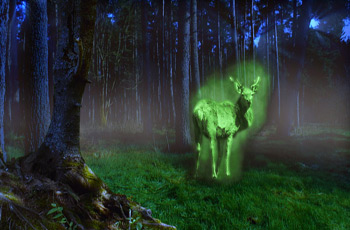
Twilight Avenger, 2008, high-definition video, courtesy the artist
Equal parts sci-fi myth and forest fable, dreamy nocturne and dazzling special effect—Kelly Richardson's Twilight Avenger begins with a fairytale-worthy image of a misty, moonlit forest clearing inhabited by a majestic stag who emanates a luminous green vapour. Quietly grazing amidst the ambient chatter of other forest dwellers (the hoot of an owl may portend an imminent threat) our protagonist occasionally rears his head, shifting his gaze towards us.
Like much of Richardson's work, Twilight Avenger poses multiple questions amidst its calculated ambiguities. The scene is at once visually convincing and obviously synthetic, peaceful and disquieting, shifting between stillness and action. As the scene unfolds, questions remain whether the protagonist is some sort of forest sentinel, as the title implies, or perhaps a victim of a man-made mishap.
Ultimately, Richardson leaves such questions unanswered, leveraging our belief in the visual document with the evocative power of the imaginary. Through painstaking application of digital effects to documentary images (Richardson filmed the deer and landscape elements in Scotland and England respectively) she invites us to question the integrity of images and perhaps ask viewers to consider our increasingly mediated relationship with nature.
Canadian-born multimedia artist Kelly Richardson lives and works in the UK. Receiving her MFA in media-studies from the Nova Scotia College of Art and Design in 2003, she has since exhibited internationally at venues including the Busan Biennale (Korea), Hallwalls (USA), Northern Gallery for Contemporary Art (UK) and the 2004 Gwangju Biennale. Most recently, her work was featured in The Cinema Effect; Illusion, Reality and the Moving Image at the Hirshhorn Museum and Sculpture Garden and at the Sundance Film Festival.
Her work is represented in the public collections of the Albright Knox Gallery (Buffalo), Art Gallery of Ontario (Toronto), Musee d'art contemporain de Montreal, and the Hirshhorn Museum and Sculpture Garden.
|
KRIS LEFCOE
JANUARY 9–MARCH 1, 2009 |
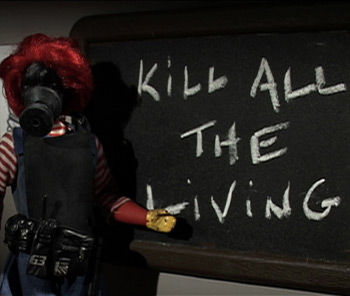
Screening presents Kris Lefcoe's Tiny Riot Project—an intricately detailed stop-motion animation. Using reconstructed stuffed toys and posable dolls, TRP offers a satirical spin on advertising aimed at children. After discovering that their local idyllic forest will be the site of the next Enormart, a young couple joins forces with a group of adorable anarchists in a peaceful protest. Little do they know that the powers that be—in a quest to protect their company's Infinite Growth—have trained an elite riot squad from an unexpected source : the warm and fuzzy characters that populate their Saturday morning cartoon commercials. Corporate mascots including Sugar Bear, Tony the Tiger and the Care Bears are reborn with gasmasks and killer instincts. Led by their sadistic captain Ronald McDonald, they unleash a reign of terror on the unsuspecting demonstrators, igniting an all-out street riot.
Kris Lefcoe is an award-winning writer-director based in New York and Toronto. Lefcoe's films occupy a space between entertainment and cultural critique, exploring themes of consumption, surveillance, and cameras as a virus. Her work has screened at Toronto International Film Festival, Miami Basel, Anthology Film Archives, Pulse Art Fair, SXSW, Berlin International Film Festival, BFI London, and many other venues worldwide. Tiny Riot Project was exhibited most recently at Galerie Thomas Shulte in Berlin.
|
MARK LEWIS
NOVEMBER 7–DECEMBER 28, 2008 |
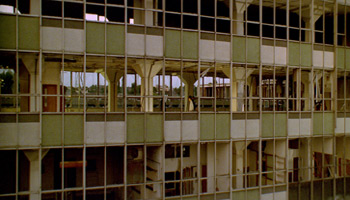
Screening is proud to present the work of London-based filmmaker Mark Lewis. With technical dexterity and formal clarity more common to commercial cinema and television, Lewis positions cinematic narrative as a function of the mechanics of film production. Working with 35mm film (later transferred to video), professional camera crews and lighting, Lewis employs the devices of mainstream movie-making to reveal their roles in creating the very meaning conveyed by moving-images. For Lewis, formal context is a powerful force—our understanding of the moving image is guided not solely by narrative structures, but is shaped quite deftly by a careful move of the camera that reframes our view of the world.
Now based in London, Lewis has exhibited his work extensively at venues including The Museum of Modern Art, The Vancouver Art Gallery, Tate Britain (London), The Whitney Museum of American Art, The Gwangju Biennale (Korea), Art Gallery of Ontario (Toronto) and the Museum of Modern and Contemporary Art, Geneva.
ARTIST LECTURE:
Presented by the University of Pennsylvania
Wednesday, November 19, 5pm
University of Pennsylvania
Meyerson Hall, B1
|
MICHAEL BELL-SMITH
SEPTEMBER 5–OCTOBER 26, 2008 |
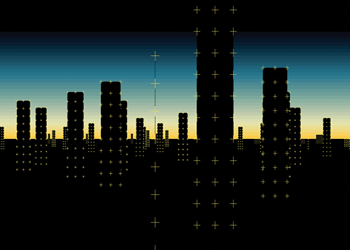
Screening is proud to kick off its Fall 2008 exhibition schedule with Michael Bell-Smith's On the Grid. Bell-Smith's minimal computer animation presents an endless cityscape scrolling continuously across the screen like the backdrop of an early arcade game. Bringing to mind the expansive future-noir cityscapes of Blade Runner, the crisp, glowing and perfect geometries of Tron and the micro-architecture of circuit boards, On the Grid points towards a geography defined by technology. With a nod towards art-historical developments in painting (perspectival systems) and cinema (the tracking shot, motion control systems), Bell-Smith applies the austere logic of digital mediato landscape representation with starkly different effect. Where these early special effects were employed most often to render a world in accord with our senses, On the Grid is pared down to a point where the basic contemporary languages of computer graphics and urban planning intersect, resulting in an image of a world where the familiar becomes alien.
Michael Bell-Smith lives and works in Brooklyn, NY. He holds a BA in Semiotics from Brown University, Providence, RI.
Selected exhibitions include: The Liverpool Biennial (2008); The 5th Seoul International Media Biennale (2008); The New Museum, New York (2008); Hirshhorn Museum, DC (2008); Krannert Art Museum - University of Illinois (2008); Musee d'Art Moderne de la Ville de Paris (2007); MoMA, New York (screening) (2007); Dallas Center for Contemporary Art, TX (2007); The Museum of Fine Arts in Lausanne, Switzerland (screening) (2006); Tate Liverpool, UK (2005).
Michael Bell-Smith's work has been featured in The New York Times, Time Out New York, Rhizome.org and Artnet.
On the Grid is Michael Bell-Smith's first gallery exhibition in Philadelphia.
> Foxy Production
> Electronic Arts Intermix
|
GEORGE STADNIK
JUNE 6–JULY 27, 2008
Presented in association with
Center for Visual Music and
International House Philadelphia
|
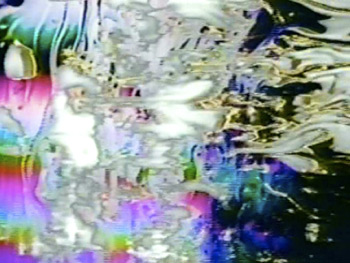
George Stadnik's 1975 video Primordial Soup, represents an early building block of video-art-history. Fusing the synaesthetic experiments of Thomas Wilfred (the creator of a form of light sculpture called Lumia) with the pioneering video synthesis techniques associated with Nam June Paik and Peter Campus, Stadnik's combination of electronically-manipulated imagery and sound references the corporeal as well as the very genesis of video art.
Primordial Soup was created on the Paik Abe Video Synthesizer at WGBH's legendary program for the creation and development of experimental video art, the New Television Workshop, under a Rockefeller Foundation Grant. An original electronic score was provided by Bill Gangi, founder Kasner Gooch Multi Sensory Arts.
George Stadnik received a BFA in Experimental Studies from Syracuse University in 1972 and began to create Lumia performances for the annual Avant Garde Festivals in NYC. In 1978, he established a Lumiagraph studio in Worcester, Massachusetts -essentially a 10'x12'x8' light-tight room or camera obscura-where he made mathematically-based Lumia or light compositions and recorded them directly as unique still images on film, which were exhibited in galleries in the United States and Europe. During this period, Stadnik was awarded a grant from the Rockefeller foundation to create a piece for the WGBH New Television Workshop in Waterdown Massachusetts, produced numerous Lumia performances for galleries and planetariums and patented a photon light guitar. Due to the logistical limitations posed by the physical Lumia device, Stadnik turned to commercial software as an alternative method of production in the 1980s. Currently, Stadnik continues to create digital Lumia simulations using programs such as Maya 5.0 with Mental Ray, Final Cut Pro and DVD Pro Studio and a Macintosh computer. —from The New York Digital Salon
This exhibition of Primordial Soup is presented in conjunction with a two-part screening at International House Philadelphia:
Center for Visual Music: Essential Visual Music
PART 1: Friday, May 23 at 7pm
Essential Visual Music: Rare Classics from CVM Archive
PART 2: Friday, May 30 at 7pm
Essential Visual Music: New Visions
Center for Visual Music is a nonprofit film archive dedicated to visual music, experimental animation and avant-garde media. CVM is commited to preservation, curation, education, scholarship, and dissemination of the film, performances and other media of this tradition, together with related historical documentation and other material.
> Digital Lumia
> Center for Visual Music
> International House Philadelphia
|
SEMICONDUCTOR
APRIL 4–JUNE 1, 2008
|
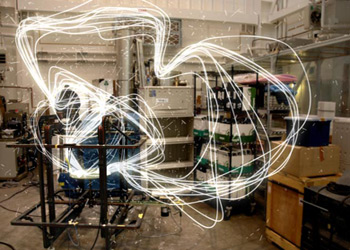
Magnetic Movie, 2007, video still
The secret lives of invisible magnetic fields are revealed as chaotic ever-changing geometries. All action takes place around NASA's Space Sciences Laboratories, UC Berkeley, set to recordings of space scientists excitedly describing their visualization techniques. Magnetic Movie delves into Earth's inaudible surroundings, revealing recurrent 'whistlers' produced by fleeting electrons. Are we observing a series of scientific experiments, the universe in flux, or a documentary of a fictional world?
Semiconductor make moving image works which reveal our physical world in flux; cities in motion, shifting landscapes and systems in chaos. Since 1999 UK artists Ruth Jarman and Joe Gerhardt have worked with digital animation to transcend the constraints of time, scale and natural forces; they explore the world beyond human experience, questioning our very existence. Their work has been exhibited widely at venues including The Museum of Contemporary Art (Lyon, France), Pacific Film Archive (Berkley), The Venice Biennale and the Ars Electronica festival.
|
DEBORAH STRATMAN
FEBRUARY 1–MARCH 30, 2008
|
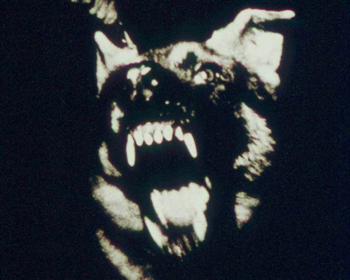
In Order Not To Be Here, 2002, 16mm film still
Deborah Stratman's In Order Not To Be Here is an uncompromising look at the ways privacy, safety, convenience and surveillance determine our environment. Shot entirely at night, the film confronts the hermetic nature of white-collar communities, dissecting the fear behind contemporary suburban design—a fear of outsiders, a fear of irregularity, a fear of thought, a fear of self. By examining evacuated suburban and corporate landscapes, the film reveals a peculiarly 21st century hollowness—an emptiness born of our collective faith in safety and technology. This is a new genre of horror movie, casting suburban locations as states of mind.
Deborah Stratman is an award-winning filmmaker and artist based in Chicago. She received her MFA from the California Institute of Arts and her BFA from the School of the Art Institute of Chicago. Since 1990 she has completed more than a dozen film projects, both on sixteen-millimeter film and on video. These works have been shown at international film festivals—including the Sundance Film Festival in Utah, the Rotterdam International Film Festival in the Netherlands, and the Vienna International Film Festival in Austria—and at art institutions such as the Wexner Center for the Arts in Columbus, Ohio, and the San Francisco Art Institute.
|
ADAM PUTNAM
DECEMBER 7, 2007–JANUARY 27, 2008
|
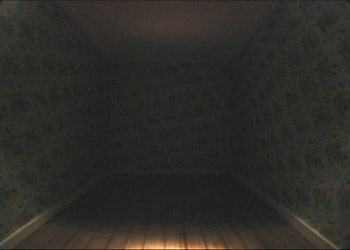
Shadworoom II, 2007, video still
Screening is proud to present Adam Putnam's shadowroom II and III in the artist's first exhibition in Philadelphia. Expanding on a diverse artistic practice that includes photography, sculpture, drawing, performance and installation, Putnam's videos make substantial a nearly erotic tension between interior and exterior space, often depicted in his work as the corporeal and the architectural.
In his shadowroom series, Putnam presents images of static, dark and entirely vacant rooms. The muted images beckon viewers to enter and occupy these spaces, while simultaneously halting one's gaze at the projection screen itself, where flickering light and digital grain skitter across its surface.
shadowroom II and III lend an almost physical presence to darkness and emptiness, perhaps referencing the phantasmagoric or the spiritual, while physically situating viewers before an alternate-dimension mirror of the gallery itself.
shadowroom II and III will be presented as a two-part exhibition beginning with shadowroom III, on view from December 7-30, and shadowroom II on view from January 4-27.
Adam Putnam was born in NYC in 1973, where he continues to live and work. Since earning a MFA from Yale in 2000, his work has been shown widely, at venues including PS1 Contemporary Art Center and Artists Space (NYC), Museum of Contemporary Art (San Diego), Serpentine Gallery (London) and The 2007 Moscow Biennale of Contemporary Art. His work will also be included in the 2008 Whitney Biennial. Putnam is represented by Taxter and Spengemann (NYC).
> taxterandspengemann.com
> timeout.com/newyork/articles/art/adam-putnam
|
TAKESHI MURATA
OCTOBER 5–DECEMBER 2, 2007
|
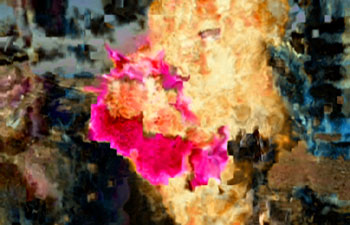
Untitled (Pink Dot), 2007, video still
Screening is very proud to present Takeshi Murata's Untitled (Pink Dot) and the artist's first solo exhibition in Philadelphia. Building on a keen knowledge of avant-garde film history (including a particular affinity for psychedelic auteurs Jordan Belson, the Whitney Brothers and Stan Brakhage) and a staggering command of digital video techniques, Murata creates vivid, lysergic videos that oscillate between damaged representation and pure abstraction.
Untitled (Pink Dot) employs action-hero imagery from Sylvester Stallone's 1982 cult/camp/classic First Blood as fodder for an eye-popping electronic meltdown in which images of our war hero John Rambo collapse under their own weight, transmuted to the point of obliteration, leaving an American icon reduced to a puddle of rainbow pixels.
Takeshi Murata was born in Chicago in 1974 and currently resides in Saugerties, NY. Since earning a B.F.A. in film, video and animation at The Rhode Island School of Design, his work has been shown widely, at venues including the Museum of Modern Art (NY), Museum of Fine Arts (Houston, TX), Yerba Buena Center for the Arts (San Francisco, CA) and Taka Ishii Gallery (Tokyo). Murata's distinctive approach to the medium most recently earned him a solo exhibition at the Hirshorn Museum and Sculpture Garden (Washington DC), and can be seen currently in the exhibition Mail Order Monsters at Deitch Projects (NY).
> www.takeshimurata.com
> www.ratio3.org
> Electronic Arts Intermix
|
PASCUAL SISTO
SEPTEMBER 7–30, 2007
|
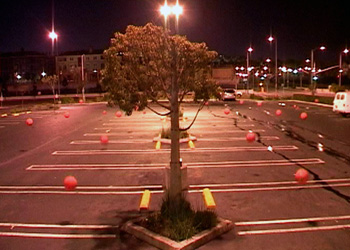
28 Years In the Implicate Order, 2007, video still
Pascual Sisto's 28 Years in the Implicate Order is a work based on the concepts of Quantum Theory and Quantum Mechanics. The video consists of a fixed locked off shot of an empty parking lot. A centered sodium vapor light illuminates the desolate landscape. Twenty-eight red balls bounce up and down in a chaotic, random manner—each ball performing as an individual entity bouncing at its own rate and speed. As the video progresses towards its mid point, the balls align themselves in a single synchronized bounce, only to resume bouncing in a random manner.
Raised in Barcelona, Pascual Sisto graduated with a BFA from the Art Center College of Design in Pasadena, California, and a MFA from the University of California, Los Angeles. His film and video work has been shown widely, including the Centre Pompidou in Paris, the Museum of Latin American Art (MALBA) in Buenos Aires, TVE (Spanish Television) and the Los Angeles International Short Film Festival. Recent exhibitions include the LA Freewaves at the Hammer Museum (Los Angeles, USA) Reencontres Internationales Paris/Berlin Festival (Paris, France), Viper Festival (Basel, Switzerland), AKA Gallery (Rome, Italy), Ego Park Gallery (Oakland, USA), MAK Center for Art and Architecture (Los Angeles, USA), Telic Gallery (Los Angeles, USA) and Bitforms Gallery (New York, USA).
> www.pascualsisto.com
|
LARS LAUMANN
JULY 6–SEPTEMBER 2, 2007
|
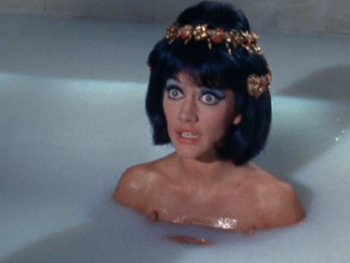
Morrissey Foretelling the Death of Diana, 2006, video still
In the wake of the 1997 tragic death of Diana, Princess of Wales, overwhelmed mourning fans began looking for ultimate meaning and posting their conspiracy theory conclusions out into cyberspace. Perhaps none was further-reaching than the complexity of David Alice's theory linking the fatal accident to another of Britain's cult heroes. Lars Laurmann's 2006 video, Morrissey Foretelling the Death of Diana, brings Mr. Alice's writings to the screen, dissecting each song on The Smiths 1986 album "The Queen is Dead." The narrative organizes "proofs" connecting the famed singer to otherworldly powers of foresight.
Lars Laumann (b. 1977) is a Film/Video artist and Sculptor based in Olso, Norway. A 2001 graduate of The Royal Norwegian Academy of Fine Art, Batchelor Oslo, he has exhibited internationally since 2001. Solo and group exhibitions include: The Palais de Tokyo, Paris; Bergen Kunsthall, Bergen, Norway; Project 0047, Berlin; Karma International, Zurich; Kling & Bang, Reykjavik, Iceland; and the 1st Milwaukee International Art Fair. Recent and upcoming screenings of Morrissey Foretelling The Death of Diana include: a solo exhibition at White Columns, New York; Maureen Paley. London; Moore Space, Miami; The Scottsdale Museum of Contemporary Art, Arizona; Le Commissariat, Entre Chienne et Louve, Paris; and the Museum of Modern Art in New York. Lars is represented by WILLY WONKA INC. in Olso.
Daniel Fuller is a 2004 graduate of the Program of Museum Studies at Syracuse University and is an Independent Curator based in Philadelphia, PA. As the Curator of New Media at the Hudson Valley Center for Contemporary Art in Peekskill, NY he curated various video exhibitions, including the citywide Dead of Winter and Peekskill Project, as well as the acclaimed Only the Paranoid Survive. Previous exhibitions have included It Is The Same Outside (2005) at the Drake in Toronto, Canada, which coincided with a one month curatorial residency; Everything I'd Ever Discovered which traveled from Cirrus Gallery in Los Angeles to Vox Populi in Philadelphia; and an exhibition of gallery artists in the Project Space at Peres Projects, Los Angeles, where he worked on projects with assume vivid astro focus and Terence Koh.
> larslaumann.blogspot.com
|
PHILIPPE DECRAUZAT
JUNE 1–JULY 1, 2007
|
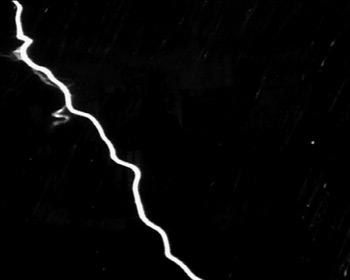
A change of speed, A change of style, A change of scene; Part II
16mm film, 3:16 min B/W
Philippe Decrauzat's 16mm film A change of speed, A change of style, A change of scene; Part II creates a matrix of television-culture images, astronomical history and avant-garde film practice.
The film is structured after the first recording of radio signal from a pulsar. Discovered in 1967 by astrophysicists Jocelyn Bell and Antony Hewish, the signal resembled what could have been an attempt at extra-terrestrial communication (the observation was briefly dubbed LGM-1 or Little Green Men-1), but was eventually determined to be a radio emission from a dying neutron star.
Characterized by its visual pulse, Decrauzat's film flickers between a black screen and images of landscapes from the TV series The Twilight Zone—a landmark of American pop culture as well as a symbol of an era marked by paranoia and fear of Communist and Martian invasion. Accompanied by a musical score from New York's sound-art collaborative New Humans, Decrauzat's stroboscopic film builds and exploits tension between sound and image, object and subject and imagination and reality.
The LP “Undercover" by New Humans, with collaborative artwork by Philippe Decrauzat and Mika Tajima will be on view as part of the exhibition.
Philippe Decrauzat, was born in 1974 and lives in Lausanne, Switzerland. Decrauzat's interests lie in investigating the status that images and image-making play in cultural practice throught a variety of media and forms. Adopting and adapting op-art strategies, Decrauzat affects a visceral viewing experience through dense patterning and layering of effects. Manipulating diverse references from Russian constructivism to sci-fi to 1970s post-punk music, Decrauzat's influences form a subtle network of visual and spatial motifs and create a viewing experience which is both thoughtful and visceral.
Recent exhibitions of Decrauzat's work include, a solo exhibition at Galerie Praz Delavallade, Paris; Komakino at MAMCO, Geneva; General Dynamics at Centre D'art Contemporaine, Delme; Bring War Home at Elisabeth Dee Gallery in New York and NOWHERENOW at Kunsthaus Baselland.
> www.newhumansnyc.com/news
|
JOHAN GRIMONPREZ
MAY 4–27, 2007
|
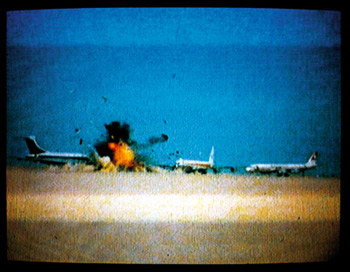
Three hijacked jets on desert Airstrip, Amman, Jordan 12 September 1970 Dial H-I-S-T-O-R-Y, Johan Grimonprez, 1997 / Photo: Johan Grimonprez and Rony Vissers / ©1997–2003 Johan Grimonprez
For its inaugural exhibition, Screening presents Dial H-I-S-T-O-R-Y by Belgian artist Johan Grimonprez. Produced in 1997, Grimonprez' comprehensive and prescient chronology of worldwide airline hijackings draws on television newsreels, feature films and other found footage, and the artist's own reconstructions to examine the development of terrorism as a political weapon and to dissect the language and meaning of the media spectacle. Gripping imagery is combined with narration inspired by Don DeLillo's White Noise and Mao II to “highlight the value of the spectacular in our catastrophe culture."
Dial H-I-S-T-O-R-Y garnered 'best director' awards at the San Francisco Film Festival and Toronto's Images Festival. Since its acclaimed premiere at Centre Georges Pompidou (Paris) and Documenta X (Kassel), the film has toured worldwide.
Johan Grimonprez is currently a faculty member at the School of Visual Arts (New York). Acquisitioned by Trio NBC Universal (New York), Arte TV (Germany/France), and Channel 4 (UK), his productions have traveled the main festival circuit from Telluride, Tokyo to Berlin. Curatorial projects have been hosted at major exhibitions and museums worldwide including the Whitney Museum (New York) and Tate Modern (London); and work is included amongst collections at the Centre Georges Pompidou (Paris), the Kanazawa Art Museum (Japan), and The National Gallerie (Berlin). He is published with Hatje/Cantz (Germany) and spends his time between New York and Brussels.
> www.zapomatik.com
> www.othercinemadvd.com/dialhistory.html
> www.medienkunstnetz.de/works/dial-history/video/1/
|